
Thermal well screen plugging: revisiting an old challenge (Part 1)

This paper presents results from novel tests investigating screen plugging and the factors that influence it. The study focuses on sand retention and flow convergence into screens, assuming formation collapse. Controlled experiments were conducted to evaluate the performance of different screens and the role of sand in plugging. The tests also explore how drilling and completion processes affect screen performance and plugging behavior. A novel test procedure was developed to simulate sand retention on screens. Screens with retained sand were placed in a flow apparatus to study multiphase flow behavior. A mix of sand and fines slurry was used to evaluate screen and near-screen plugging. The effect of mud and filter cake was assessed by allowing cake formation on the sand face before flowing. Additionally, the influence of temperature—up to 200°C—was examined to understand thermal impacts on screen plugging mechanisms under realistic downhole conditions. This study utilized three Particle Size Distribution (PSD) classes from the McMurray Formation to represent common variations in thermal project sands. A common polymeric mud, representative of the mud system used in thermal drilling, was employed.

The thickness of the mud cake varied significantly among the three sands and was directly related to their permeability, with finer sands forming denser cakes that reduced retained permeability by over 55% in the lowest permeability class. Experiments during the drawdown phase revealed that wire-wrapped screens outperformed punch screens in permeability recovery due to enhanced channeling, with coarser PSDs showing better restoration (up to 72% retention). Thermal exposure at 200°C, intended to break down polymers, instead densified the cake with residue deposition, reducing post-steaming permeability by 5-30% depending on PSD, though wire-wrapped screens with 100-150 μm slots mitigated losses. Plugging occurred primarily at the sand-cake interface, emphasizing the need for near-screen management. These findings support preventive measures to minimize plugging and optimize thermal performance. This study aims to help engineers understand the key factors influencing screen plugging and the resulting high differential pressure drop between injectors and producers. The insights gained support the implementation of preventive measures to avoid or minimize screen plugging, improving overall system performance and reliability.
Download paper

Overcoming Field Development Challenges in the Ubaque Formation: Insights from an 8-Well Horizontal Drilling Program in Colombia’s Carrizales Norte Heavy-Oil Reservoir. A Case Study

Carrizales Norte is a heavy-oil development in Colombia’s Llanos Basin targeting the Ubaque Formation, a sequence of permeable sandstones interbedded with shales and mudstones. The reservoir stores significant hydrocarbons but presents challenges, including early water breakthrough and sand production. This paper discusses the results and lessons learned from an 8-horizontal-well development program in this complex reservoir, highlighting the difficulties of managing these geological conditions.

Facing challenges with cased and perforated (C&P) wells, the operator initiated detailed evaluations to optimize the lower completion design for horizontal wells, focusing on sanding and high water cut issues to improve project economics. A sand control design study, including large-scale testing, was conducted to select the best standalone screen solution, while a technology assessment determined the most effective water control mechanism. Of the eight wells drilled, five utilized the Autonomous Inflow Control Valve (AICV) technology with direct wire-wrapped screens (DWWS) and bonded swell packers, seamed slotted liners (SSL) were installed in two and one well was completed with a hybrid of SSL and straight slotted liners.

The sand control evaluation focused on defining the sand box within the development area by analyzing 35 sand samples from five existing cased and perforated (C&P) wells. The analysis determined the variation in particle size distribution (PSD), particle shape, and composition of fines. Sand retention tests (SRT) were conducted to identify the optimal aperture size and compare the relative performance of seamed slotted liners (SSL) and DWWS. The wells, drilled with lateral lengths ranging from 1,000 to 4,600 ft, faced challenges due to the dipping formation. SSL wells were drilled first, placing them farther from the oil-water contact (OWC), while the Autonomous Inflow Control Valve (AICV) wells were drilled closer to the OWC, in more challenging conditions. The results demonstrated effective sand control, underscoring the importance of a comprehensive sand control design workflow. The AICV wells exhibited superior water control capabilities, successfully managing water production across all wells. SSL wells, even though not achieving the same level of water control as the AICV wells, still exceeded the operator’s original expectation and proved to be a cost-effective sand control means if designed properly. These findings emphasize the significance of selecting appropriate technologies based on reservoir conditions to optimize sand and water management.

Field production data highlights the importance of thorough studies and analysis to ensure the success of greenfield developments. The AICV technology has improved reservoir management by improving water-cut behavior in very challenging conditions; exhibiting exceptional water control despite being placed much closer to the OWC. Such results have allowed the operator to optimize the use of water handling facilities and disposal wells, improving project economics. Additionally, this technology helps reduce greenhouse gas (GHG) emissions by lowering energy requirements per well, thereby positively influencing both field development and overall project economics.

Download paper

FET Propack

proPACK®

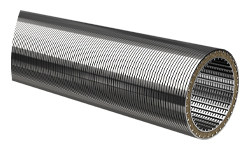
proPACK®: Prepacked Rod Based Wire-Wrapped Screen

FET Variperm’s proPACK Prepacked Rod Based Screens are manufactured and installed as a self-supported concentric assembly with no base pipe.

FEATURES & BENEFITS

  • Diameters from 2” Pipe Size to 18” Pipe Size
  • 0.250” – 1.00” radial pack
  • Double re-sieved well rounded silica sand or carbo ceramic pack media
  • Slot size selected based on filter pack media sizing
  • 12-20, 16-30, 20-40 prepack media
  • Corrosion-resistant stainless steel (304L or 316L)
  • High flow rate with low-pressure drop
  • Erosion resistant

APPLICATIONS

  • Fine aquifer sands require filter media to achieve sand control
  • Alternative to gravel packing
  • High-rate water source wells
  • De-watering wells
  • Vertical and deviated water wells
  • Remedial screen completions
FET Propack

Contact our sand control experts to learn how we can unlock the potential of your reservoir at [email protected].

proWRAP

proWRAP®

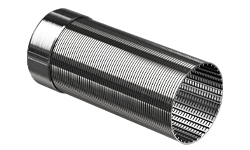
proWRAP®: Rod-Based Wire-Wrapped Screen

FET Variperm’s proWRAP Rod-Based Screens are manufactured and installed as a self-supported assembly with no base pipe.

FEATURES & BENEFITS

  • Pipe Size and Telescope Screen options
  • Diameters from 3/8” Pipe Size to 18” Pipe Size/20” Telescope
  • Rib and Wrap wire combinations selected for each diameter to achieve desired flow rate, yield, and collapse strength
  • Slot sizes range from 0.004” to 0.500”
  • Corrosion-resistant stainless steel (304L or 316L)
  • Butt Weld fittings, NPT, F480, and other threaded connections available
  • High flow rate with low-pressure drop
  • Optimal for well development purposes

APPLICATIONS

  • High-rate water source wells
  • De-watering wells
  • Vertical and deviated water wells
  • Remedial screen completions
proWRAP

Contact our sand control experts to learn how we can unlock the potential of your reservoir at [email protected].

The evolution of the design, evaluation, and monitoring of standalone screens

This paper aims to comprehensively introduce the historical, present, and future landscape of standalone screens’ design, and evaluation. The evolution of sand control screen design, testing, and implementation is explored, with a focus on its role in overcoming the challenges posed by heterogeneous geological formations and complex EOR strategies. Field case data will be used to illuminate the need for a more scientific approach to sand control engineering.

As operators venture into increasingly complex and heterogeneous formations, precise sand control engineering becomes imperative. This paper will delve into the historical standalone screen design, highlighting its advantages and drawbacks. Through field case examples, we will underscore the necessity for a more scientific approach. A comprehensive sand control design cycle—from information acquisition and lab testing to data analytics, manufacturing, field installation, monitoring, and post-performance analysis—will be elucidated.

Since 2017, the first attempt to optimize the standalone screen design has led to the development of a sand control best practice. The best practice outlines the guidelines and steps that must be followed on the sand control design, evaluation, and monitoring for future pads. The guidelines have been successfully implemented in the field with remarkable success and no failure to report to date. The guidelines specify the sampling method, the testing requirement to identify the sand variation within the studied sandbox, and selection criteria and evaluation testing through sand retention testing. The guidelines specify the manufacturing tolerances for each screen type. Additionally, the monitoring details for wells completed with sand control and adjustment of the best practices based on the monitoring data are outlined in the guidelines. This paper shares the rich history and lessons learned from sand control design from two fields where different standalone screens are used as the primary completion method.

Designing and optimizing the sand control screens for wells is a formidable challenge, given the intricate nature of downhole environments. This paper conveys lessons and learns from field case studies to the industry, shedding light on the complexities and offering guidance for future sand screen engineering. The insights shared aim to contribute to the continuous improvement and advancement of sand control practices in the global hydrocarbon recovery sector.

Download paper

State of the Art for High-Rate Groundwater Sand Control: Design, Fabrication, Installation, and Field Performance

This presentation focuses on the state of the art for selecting and designing sand control methods for groundwater applications, and the delicate balance of field practices with geological and hydrogeological conditions. It examines the design, manufacturing, and implementation of sand control across various applications such as mine dewatering, solution mining, disposal, and municipal water wells. By reviewing case studies, it highlights the importance of characterizing the sand box and sandface interval for effective screen design. Unique challenges in certain applications, like solution mining and acid leaching, require specialized techniques. Once screen sizing for solid retention is determined, selecting proper sizing for target rates is crucial. The presentation showcases different fabrication techniques and industry best practices for field implementation and completion through various case studies. By sharing lessons learned, the presentation aims to enhance sand control practices in the global groundwater sector.

Download paper

Technology focus: Sand Management (2024)

With the resurgence of drilling activities post-COVID-19, there is a growing interest in refining existing technologies and exploring new ones to discover cost-effective and reliable solutions for developing aged and more-challenging new reservoirs.

Although approaches may vary slightly depending on the unique characteristics of reservoirs in different regions, the general trends are conceptually similar. Drilling longer wells, increasing the number of fracture stages, and completing multiple zones in complex stacked reservoirs, along with optimizing multilateral wells with sand control to enable long laterals in stacked reservoirs, have emerged as key focuses of the industry.

Drilling longer wells introduces several challenges, including managing installation loads, ensuring proper wellbore cleanout, and ultimately producing effectively and uniformly from extended laterals that drill through heterogeneous reservoirs with varying sand facies. While liner flotation is effective in reducing installation loads and improving wellbore cleaning, it presents challenges when used in conjunction with conventional sand-control screens.

Sand control and flow control are becoming more integrated to offer solutions for effective production from longer laterals. Flow segmentation helps prevent premature failures caused by gas or water breakthroughs or localized high rates causing erosion. Paper SPE 218074 is a good example of using flow-control devices to enhance the reliability and longevity of sand-control systems.

Stacked reservoirs have always posed challenges in terms of zonal isolation and sand-control design. Higher fines content and silty sand with complex reservoir conditions leads to less interest in standalone screens because of the high risk of plugging and failure in such developments. Even though gravel packing is effective, it poses several technical and implementation challenges. The complexity of sandface completion, with varying sand sizes, pressures, and fluid properties, makes these wells particularly difficult to complete. Paper SPE 214914 offers a good case study of such a complex completion successfully implemented in the field.

Despite all this, the fundamentals of screen design and implementation remain the same. Screen plugging remains one of the major challenges in the sand-control industry. Rigorous testing of sand-control media to verify retention properties, erosional resistance, integrity requirements for the installation-loading and lifelong-loading scenarios, and plugging resistance are critical aspects of any sand-control qualification. I strongly recommend reading paper IPTC 23690 for a detailed understanding of the screen-qualification process and the design of screens for target sand facies.

Also, it is crucial to remember that no screen is completely immune to plugging. The unintended consequences of a change in drilling/completion fluid or cleanout process could lead to screen plugging. It is always important to test and validate the effect of any change in fluids or completion practices on sand-control performance.

Download paper

engineering icon

Product Development

engineering icon

Product Development

Variperm provides a comprehensive range of engineering, technical, product design services for the oil and gas industry. Maximizing efficiency through all phases of projects, from planning and design to construction and operations, is Variperm’s specialty. Our multidisciplinary teams deliver cost-effective solutions and a hands-on approach to ensure project success.

Unlock the potential of your reservoir with product development.

PROGRAMS WE USE

  • ANSYS – Mechanical
  • Open Foam
  • Solidworks – Premium
  • Matlab
  • Mathcad

 PRODUCT DEVELOPMENT

  • Conceptual and Detailed Design
  • Validation
  • Commercialization
  • Adhering to API Q1™ and ISO 9001:2015 Certifications

DOWNHOLE INTEGRITY ANALYSIS

INSTALLATION LOAD ANALYSIS

  • Loading Envelope
  • Single Point Loading:  Tensile/Compression, Torsion, Bending, and Buckling
  • Combined Loading:  combined loading scenarios for highly deviated and horizontal wells

TORQUE AND DRAG ANALYSIS

FAILURE AND ROOT CAUSE ANALYSIS

  • Mechanical
  • Plugging
  • Corrosion
  • Scaling and Fouling