proWRAP

proWRAP®

proWRAP®: Wire-Wrapped Screen

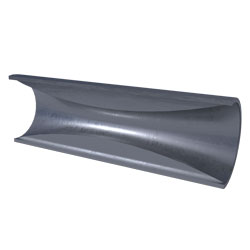
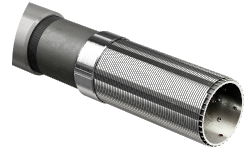
FET Variperm’s proWRAP sand control device (SCD) is a direct or slip-on wire-wrapped screen positioned over top of a slotted or perforated base pipe.

FEATURES & BENEFITS

  • Large open flow area (5 to 20% or more)
  • Corrosion-resistant stainless steel (304L or 316L)
  • Plugging-resistant keystone profile
  • High-strength slotted or perforated basepipe
  • High flow rate with low-pressure drop

APPLICATIONS

  • Openhole standalone completions
  • Secondary liner completions
  • Cased and perforated completions
  • Horizontal, deviated, and vertical wells
  • Producer, injector, and infill wells
  • Ideal for medium to high velocity wells
proWRAP

Contact our sand control experts to learn how we can unlock the potential of your reservoir at [email protected].
proPACK

proPACK®

proPACK®: Prepacked Screen

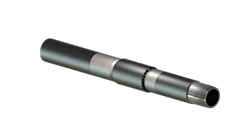
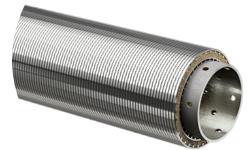
FET Variperm’s proPACK sand control device (SCD) is a slip on modular gravel pack system, with two outer screens, positioned over top of a perforated or slotted base pipe.

FEATURES & BENEFITS

  • Large open flow area (5 to 20% or more)
  • Corrosion-resistant stainless steel (304L or 316L)
  • Plugging-resistant keystone profile
  • High-strength slotted or perforated basepipe
  • High flow rate with low-pressure drop
  • High permeability

APPLICATIONS

  • Openhole standalone completions
  • Secondary liner completions
  • Cased and perforated completions
  • Horizontal, deviated, and vertical wells
  • Producer, injector, and infill wells
  • Ideal for high-velocity wells
proPACK

Contact our sand control experts to learn how we can unlock the potential of your reservoir at [email protected].
proPUNCH

proPUNCH®

proPUNCH®: Punch Screen

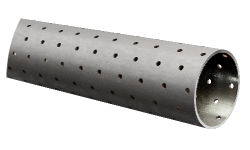
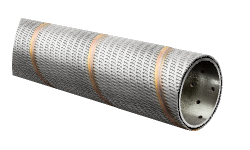
FET Variperm’s proPUNCH sand control device (SCD) is a slip-on punched screen positioned over top of a slotted or perforated base pipe.

FEATURES & BENEFITS

  • Large open flow area (2 to 8% or more)
  • Corrosion-resistant stainless steel (304L or 316L)
  • High-strength slotted or perforated basepipe
  • High flow rate with low-pressure drop

APPLICATIONS

  • Openhole standalone completions
  • Secondary liner completions
  • Cased and perforated completions
  • Horizontal, deviated, and vertical wells
  • Producer, injector, and infill wells
  • Ideal for medium to high velocity wells
proPUNCH

Contact our sand control experts to learn how we can unlock the potential of your reservoir at [email protected].
proSLOT

proSLOT®

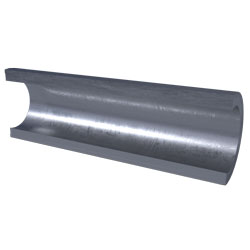
proSLOT®: Straight Slotted Liner

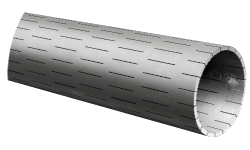
FET Variperm’s proSLOT straight-slotted liner sand control device (SCD) is manufactured to create a straight slot in the base pipe, reducing sand infiltration while maintaining superior mechanical strength and integrity.

FEATURES & BENEFITS

  • Patented thermal deburring technology
  • High-strength slotted liner
  • Economic straight slot
  • Flush OD with no outer screens

APPLICATIONS

  • Openhole standalone completions
  • Secondary liner completions
  • Cased and perforated completions
  • Horizontal, deviated, and vertical wells
  • Producer, injector, and infill wells
  • Ideal for low to medium velocity wells
proSLOT

Contact our sand control experts to learn how we can unlock the potential of your reservoir at [email protected].
proSEAM

proSEAM®

proSEAM®: Seamed-Slotted Liner

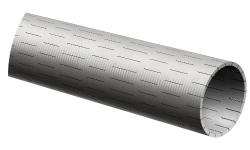
FET Variperm’s proSEAM slotted liner sand control device (SCD) is manufactured to create a “keystone” profile of each slot, reducing sand infiltration and plugging potential while maintaining superior mechanical strength and integrity.

FEATURES & BENEFITS

  • Patented thermal deburring technology
  • High-strength slotted liner
  • Plugging-resistant seamed slot keystone profile
  • Flush OD with no outer screens

APPLICATIONS

  • Openhole standalone completions
  • Secondary liner completions
  • Cased and perforated completions
  • Horizontal, deviated, and vertical wells
  • Producer, injector, and infill wells
  • Ideal for low to medium velocity wells
proSEAM

Contact our sand control experts to learn how we can unlock the potential of your reservoir at [email protected].
proMESH

proMESH®

proMESH®: Woven Metal Mesh Screen

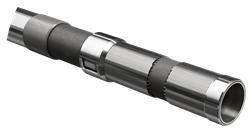
FET Variperm’s proMESH is a cost-effective sand control solution that is designed to filter a high percentage of poorly sorted sands in unconsolidated formations. It consists of the base pipe – either slotted or perforated – support core, filter media, drainage layer, and protective shroud.

FEATURES & BENEFITS

  • Large open flow area (5 to 20% or more)
  • Corrosion-resistant stainless steel (304L or 316L)
  • Plugging-resistant keystone profile
  • High-strength slotted or perforated basepipe
  • High flow rate with low-pressure drop
  • Flexibility in design and production

APPLICATIONS

  • Openhole standalone completions
  • Secondary liner completions
  • Cased and perforated completions
  • Horizontal, deviated, and vertical wells
  • Producer, injector, and infill wells
  • Ideal for high velocity wells
proMESH

Contact our sand control experts to learn how we can unlock the potential of your reservoir at [email protected].

Impact of Inflow and Outflow Rate Control to Minimize Freshwater Usage: Historical Canadian Steam-Assisted Gravity Drainage Operations versus Numerical Simulations

This work delves into the effects of utilizing flow control devices (FCDs) to manage inflow and outflow rates on the performance of steam-assisted gravity drainage (SAGD) wells. The focus is on the impact of FCDs on enhancing oil production and reducing the cumulative steam oil ratio (cSOR). A retrospective analysis is conducted using historical data from Canadian SAGD operations to assess the impact of different flow control strategies. Additionally, numerical simulations are performed for various reservoir types, including homogeneous, simple with shale barriers, and heterogeneous reservoirs. FCDs are simulated based on findings from published flow-loop experiments. The primary benefit of incorporating flow-loop experiment data into the simulation lies in creating a mechanistic model grounded in physics as opposed to relying on empirical correlations. By comparison of the outcomes of both real-world data and numerical simulations, this study examines the influence of different flow rate control strategies on SAGD performance. Analyzing historical data extracted from a database encompassing seven major SAGD projects in Western Canada revealed that the optimal approach to enhance oil production and reduce cSOR involves the joint utilization of liner-deployed inflow control devices (LDICDs) and liner-deployed outflow control devices (LDOCDs). Given the limited availability of public information concerning the technical intricacies of flow rate control strategies and their implications on SAGD well performance, a series of simulations across diverse reservoir scenarios were conducted to investigate the mechanisms underlying the impact of FCDs on SAGD well performance. The numerical simulation findings revealed that the combined deployment of LDICDs and LDOCDs effectively managed hot-spot zones, where the inflow rate exceeded that of other sections along the producer well, leading to improved steam distribution. These results showed a potential increase in oil production of up to 26% and a reduction in the cSOR of up to 17%. This research endeavors to enhance our comprehension of how flow rate control through FCDs influences the performance of SAGD wells. The primary objective is to pave the way for more efficient well designs that contribute to reduced greenhouse gas (GHG) emissions, aligned with climate change mitigation goals.

Download paper

A practical workflow to design inflow control devices in SAGD projects to increase production and lower fresh water usage

This paper discusses the significance of inflow control devices (ICDs) in steam-assisted gravity drainage (SAGD) operations and their impact on well performance in different reservoir heterogeneities and qualities. The study focuses on investigating the specifications of ICD design using a numerical flow simulation model and flow rate versus pressure data obtained from a flow-loop experiment. The key advantage of employing flow-loop experiment data in the simulation would be a physics-based mechanistic model rather than using empirical correlations.

The research collects core analysis data from three wells and particle size distribution (PSD) data from four wells in the same location. Permeability estimation is conducted for each PSD using a previously developed correlation. These data and other real data are used to construct the reservoir model, and the performance of liner deployed (LD) ICDs is compared by assigning flow-loop data to the simulation.

By employing a relatively conservative production approach with subcooling between 10 °C and 15 °C, the cases with LDICDs demonstrate higher oil production rates, improved steam conformance, and lower cumulative steam oil ratios (cSOR) compared to the case without LDICDs. However, in a relatively challenging production scenario with subcooling between 1 °C and 5 °C, the case without ICDs cannot be simulated at the desired subcooling temperature and the cases with LDICDs improved the well productivity. LDICD#1 is identified in both scenarios as the best case due to its enhanced steam conformance and higher oil production rate.

Compared to the case without ICDs, using LDICD#1 at higher subcooling temperatures leads to a 17 % increase in oil production rate, while reducing cSOR and natural gas usage by 8 % and 10 % respectively. Similarly, at lower subcooling temperatures, the case with LDICD#1 shows a 21 % increase in oil production rate and reductions of 12 % and 17 % in cSOR and consumed natural gas respectively, compared to the case without ICDs.

The findings highlight the effectiveness of LDICDs at various subcooling levels and their potential application in SAGD projects to reduce freshwater usage and greenhouse gas emissions. Completion and production engineers can benefit from a better understanding of relative production performance to develop more effective operational designs.

Download Paper

Data-driven analysis of using flow control devices and extended reach wells on SAGD well performance

The industry’s current trend to reduce Capital Expenditures (CapEx) and to minimize the environmental impacts has led to drilling long lateral wells and developing key innovative tools like Flow Control Devices (FCDs). This study analyzed the relative performance of various FCD deployments using data from major Steam-Assisted Gravity Drainage (SAGD) projects in Western Canada, spanning from 1997 to mid-2022. The goal is to investigate the impact of FCD deployment and increasing the lateral length on SAGD well performance in terms of boosting oil produciton and lowering cumulative Steam Oil Ratio (cSOR).

This paper utilizes a normalization technique to evaluate the production history of wells, considering geological and operational parameters. Following our confidential conversations with experts in the industry, wells exceeding 850 m in lateral lengths are labeled as “long”, while those below 850 m are labeled as “short”. Eventually, normalized oil production and cSOR for all wells are analyzed. A comparison is made between short and long wells that are completed or retrofitted with FCDs, giving an insight into the role of completion design on the relative performance of SAGD wells.

Reservoir thickness and reservoir quality are assessed for each well using contour maps and Gamma Ray (GR) log images. These images are digitized using image processing codes developed in our study. On average, across all projects, wells equipped with FCDs produced up to 52% more normalized oil than those without FCDs, and cSOR decreased to 18%. Long wells, on average, had lateral lengths 38% greater than short wells and produced 18% more normalized oil than all short wells. When comparing long wells with and without FCDs, the normalized oil production is improved by up to 36%, and cSOR is lowered by up to 17%. Furthermore, comparing long wells with FCDs to short wells without FCDs reveals that the normalized oil production is improved by up to 96%, and cSOR is lowered by up to 26%. The results highlight the synergistic benefits of combining longer wells with FCDs to improve normalized oil production and cSOR. The historical production analysis show that installing FCDs is the key enabler and an innovative strategy to increase productivity, reduce cSOR, and make longer wells more productive.

The findings indicate that FCDs might increase oil production and decrease cSOR for SAGD well-pad developments, allowing operators to reduce Greenhouse Gas (GHG) emissions intensity. The findings may be used to examine paradigm shifts in the development of heavy oil deposits as technology advances while keeping the project economics into account.

Download Paper

Flow Control Device and Liner Floatation: Key Technology Driver in Extreme Extended Reach SAGD Wells

Pursuing more cost-effective well construction and reduced surface footprint has prompted Western Canadian operators to explore extreme extended reach drilling (ERD) wells. However, this endeavor faces a critical challenge: most heavy oil reserves are relatively shallow, resulting in the unwrapped reach ratio (the total horizontal length when projected on the horizontal plane to true vertical depth (TVD)) of more than seven. Therefore, to drill ERD wells, two crucial technical challenges must be tackled: successful liner installation, and efficient steam distribution along these long laterals to enhance production.

This paper delves into the solutions for these challenges and a case study showcasing the recent drilling of a steam-assisted gravity drainage (SAGD) extreme ERD well. While floating liners are a known method for extending well reach, they are uncommon in SAGD wells. However, some companies have started exploring the use of floating liners in SAGD projects due to their potential to greatly expand lateral well length, reducing footprint and increasing the oil recovery from any one well pair. By floating the liner using plugged flow control devices (FCDs), gentler running procedures can be employed to achieve TD without risking the integrity of the liner. Moreover, utilizing FCDs in floating liners improves steam conformance and oil production while reducing the cumulative steam oil ratio (cSOR) during the production phase.

Modeling results can enhance our capabilities in planning shallower SAGD wells with longer productive sections in the future, with (as described herein) horizontal liner lengths of 1700m and true vertical depths of 240m. The modeling results show that floating liners using plugged FCDs reduce torque by an average of 22% and bottom hole torque by 28%, while also decreasing drag by 16% on average, and bottom hole drag by 17%. These findings indicate that floating liners with plugged FCDs offer a promising solution for SAGD and CSS extreme ERD wells limited by liner installation forces. Furthermore, wells with FCDs in uplifted cases displayed a remarkable upswing of 57%, while concurrently, cSOR demonstrated a noteworthy decrease of 18%. Uplifted cases are identified when wells were completed or retrofitted with FCDs and showed increased oil production compared to neighboring wells.

The successful implementation of floating liners with dissolvable or meltable plugs on FCDs enhances confidence in future SAGD extreme ERD wells. The implementation of FCDs in extreme ERD well designs could contribute to reduced greenhouse gas (GHG) emissions, aligning with efforts to combat climate change and minimize environmental impacts. The study’s findings elaborated on driving paradigm shifts in the development of heavy oil resources as technology advances, while considering economic factors.

Download paper