proMESH

proMESH®

proMESH®: Woven Metal Mesh Screen

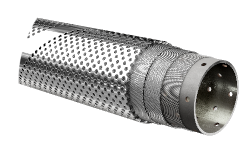
FET Variperm’s proMESH is a cost-effective sand control solution that is designed to filter a high percentage of poorly sorted sands in unconsolidated formations. It consists of the base pipe – either slotted or perforated – support core, filter media, drainage layer, and protective shroud.

FEATURES & BENEFITS

  • Large open flow area (5 to 20% or more)
  • Corrosion-resistant stainless steel (304L or 316L)
  • Plugging-resistant keystone profile
  • High-strength slotted or perforated basepipe
  • High flow rate with low-pressure drop
  • Flexibility in design and production

APPLICATIONS

  • Openhole standalone completions
  • Secondary liner completions
  • Cased and perforated completions
  • Horizontal, deviated, and vertical wells
  • Producer, injector, and infill wells
  • Ideal for high velocity wells
proMESH

Contact our sand control experts to learn how we can unlock the potential of your reservoir at [email protected].

Impact of Inflow and Outflow Rate Control to Minimize Freshwater Usage: Historical Canadian Steam-Assisted Gravity Drainage Operations versus Numerical Simulations

This work delves into the effects of utilizing flow control devices (FCDs) to manage inflow and outflow rates on the performance of steam-assisted gravity drainage (SAGD) wells. The focus is on the impact of FCDs on enhancing oil production and reducing the cumulative steam oil ratio (cSOR). A retrospective analysis is conducted using historical data from Canadian SAGD operations to assess the impact of different flow control strategies. Additionally, numerical simulations are performed for various reservoir types, including homogeneous, simple with shale barriers, and heterogeneous reservoirs. FCDs are simulated based on findings from published flow-loop experiments. The primary benefit of incorporating flow-loop experiment data into the simulation lies in creating a mechanistic model grounded in physics as opposed to relying on empirical correlations. By comparison of the outcomes of both real-world data and numerical simulations, this study examines the influence of different flow rate control strategies on SAGD performance. Analyzing historical data extracted from a database encompassing seven major SAGD projects in Western Canada revealed that the optimal approach to enhance oil production and reduce cSOR involves the joint utilization of liner-deployed inflow control devices (LDICDs) and liner-deployed outflow control devices (LDOCDs). Given the limited availability of public information concerning the technical intricacies of flow rate control strategies and their implications on SAGD well performance, a series of simulations across diverse reservoir scenarios were conducted to investigate the mechanisms underlying the impact of FCDs on SAGD well performance. The numerical simulation findings revealed that the combined deployment of LDICDs and LDOCDs effectively managed hot-spot zones, where the inflow rate exceeded that of other sections along the producer well, leading to improved steam distribution. These results showed a potential increase in oil production of up to 26% and a reduction in the cSOR of up to 17%. This research endeavors to enhance our comprehension of how flow rate control through FCDs influences the performance of SAGD wells. The primary objective is to pave the way for more efficient well designs that contribute to reduced greenhouse gas (GHG) emissions, aligned with climate change mitigation goals.

Download paper

A practical workflow to design inflow control devices in SAGD projects to increase production and lower fresh water usage

This paper discusses the significance of inflow control devices (ICDs) in steam-assisted gravity drainage (SAGD) operations and their impact on well performance in different reservoir heterogeneities and qualities. The study focuses on investigating the specifications of ICD design using a numerical flow simulation model and flow rate versus pressure data obtained from a flow-loop experiment. The key advantage of employing flow-loop experiment data in the simulation would be a physics-based mechanistic model rather than using empirical correlations.

The research collects core analysis data from three wells and particle size distribution (PSD) data from four wells in the same location. Permeability estimation is conducted for each PSD using a previously developed correlation. These data and other real data are used to construct the reservoir model, and the performance of liner deployed (LD) ICDs is compared by assigning flow-loop data to the simulation.

By employing a relatively conservative production approach with subcooling between 10 °C and 15 °C, the cases with LDICDs demonstrate higher oil production rates, improved steam conformance, and lower cumulative steam oil ratios (cSOR) compared to the case without LDICDs. However, in a relatively challenging production scenario with subcooling between 1 °C and 5 °C, the case without ICDs cannot be simulated at the desired subcooling temperature and the cases with LDICDs improved the well productivity. LDICD#1 is identified in both scenarios as the best case due to its enhanced steam conformance and higher oil production rate.

Compared to the case without ICDs, using LDICD#1 at higher subcooling temperatures leads to a 17 % increase in oil production rate, while reducing cSOR and natural gas usage by 8 % and 10 % respectively. Similarly, at lower subcooling temperatures, the case with LDICD#1 shows a 21 % increase in oil production rate and reductions of 12 % and 17 % in cSOR and consumed natural gas respectively, compared to the case without ICDs.

The findings highlight the effectiveness of LDICDs at various subcooling levels and their potential application in SAGD projects to reduce freshwater usage and greenhouse gas emissions. Completion and production engineers can benefit from a better understanding of relative production performance to develop more effective operational designs.

Download Paper

Data-driven analysis of using flow control devices and extended reach wells on SAGD well performance

The industry’s current trend to reduce Capital Expenditures (CapEx) and to minimize the environmental impacts has led to drilling long lateral wells and developing key innovative tools like Flow Control Devices (FCDs). This study analyzed the relative performance of various FCD deployments using data from major Steam-Assisted Gravity Drainage (SAGD) projects in Western Canada, spanning from 1997 to mid-2022. The goal is to investigate the impact of FCD deployment and increasing the lateral length on SAGD well performance in terms of boosting oil produciton and lowering cumulative Steam Oil Ratio (cSOR).

This paper utilizes a normalization technique to evaluate the production history of wells, considering geological and operational parameters. Following our confidential conversations with experts in the industry, wells exceeding 850 m in lateral lengths are labeled as “long”, while those below 850 m are labeled as “short”. Eventually, normalized oil production and cSOR for all wells are analyzed. A comparison is made between short and long wells that are completed or retrofitted with FCDs, giving an insight into the role of completion design on the relative performance of SAGD wells.

Reservoir thickness and reservoir quality are assessed for each well using contour maps and Gamma Ray (GR) log images. These images are digitized using image processing codes developed in our study. On average, across all projects, wells equipped with FCDs produced up to 52% more normalized oil than those without FCDs, and cSOR decreased to 18%. Long wells, on average, had lateral lengths 38% greater than short wells and produced 18% more normalized oil than all short wells. When comparing long wells with and without FCDs, the normalized oil production is improved by up to 36%, and cSOR is lowered by up to 17%. Furthermore, comparing long wells with FCDs to short wells without FCDs reveals that the normalized oil production is improved by up to 96%, and cSOR is lowered by up to 26%. The results highlight the synergistic benefits of combining longer wells with FCDs to improve normalized oil production and cSOR. The historical production analysis show that installing FCDs is the key enabler and an innovative strategy to increase productivity, reduce cSOR, and make longer wells more productive.

The findings indicate that FCDs might increase oil production and decrease cSOR for SAGD well-pad developments, allowing operators to reduce Greenhouse Gas (GHG) emissions intensity. The findings may be used to examine paradigm shifts in the development of heavy oil deposits as technology advances while keeping the project economics into account.

Download Paper

Flow Control Device and Liner Floatation: Key Technology Driver in Extreme Extended Reach SAGD Wells

Pursuing more cost-effective well construction and reduced surface footprint has prompted Western Canadian operators to explore extreme extended reach drilling (ERD) wells. However, this endeavor faces a critical challenge: most heavy oil reserves are relatively shallow, resulting in the unwrapped reach ratio (the total horizontal length when projected on the horizontal plane to true vertical depth (TVD)) of more than seven. Therefore, to drill ERD wells, two crucial technical challenges must be tackled: successful liner installation, and efficient steam distribution along these long laterals to enhance production.

This paper delves into the solutions for these challenges and a case study showcasing the recent drilling of a steam-assisted gravity drainage (SAGD) extreme ERD well. While floating liners are a known method for extending well reach, they are uncommon in SAGD wells. However, some companies have started exploring the use of floating liners in SAGD projects due to their potential to greatly expand lateral well length, reducing footprint and increasing the oil recovery from any one well pair. By floating the liner using plugged flow control devices (FCDs), gentler running procedures can be employed to achieve TD without risking the integrity of the liner. Moreover, utilizing FCDs in floating liners improves steam conformance and oil production while reducing the cumulative steam oil ratio (cSOR) during the production phase.

Modeling results can enhance our capabilities in planning shallower SAGD wells with longer productive sections in the future, with (as described herein) horizontal liner lengths of 1700m and true vertical depths of 240m. The modeling results show that floating liners using plugged FCDs reduce torque by an average of 22% and bottom hole torque by 28%, while also decreasing drag by 16% on average, and bottom hole drag by 17%. These findings indicate that floating liners with plugged FCDs offer a promising solution for SAGD and CSS extreme ERD wells limited by liner installation forces. Furthermore, wells with FCDs in uplifted cases displayed a remarkable upswing of 57%, while concurrently, cSOR demonstrated a noteworthy decrease of 18%. Uplifted cases are identified when wells were completed or retrofitted with FCDs and showed increased oil production compared to neighboring wells.

The successful implementation of floating liners with dissolvable or meltable plugs on FCDs enhances confidence in future SAGD extreme ERD wells. The implementation of FCDs in extreme ERD well designs could contribute to reduced greenhouse gas (GHG) emissions, aligning with efforts to combat climate change and minimize environmental impacts. The study’s findings elaborated on driving paradigm shifts in the development of heavy oil resources as technology advances, while considering economic factors.

Download paper

Technology focus: Sand Management (2023)

As drilling and completion activity resumes post-pandemic, the sand-control market faces several logistical challenges. Inflation and supply-chain interruption concerns are expected to continue into 2024 because of high volatility in raw material pricing amplified by geopolitical tensions in Europe and the South China Sea. As oil price strengthens, consumer preferences shift and more operators investigate newer technology and focus more on performance than price.

Despite these factors, the fundamentals of sand control and sand management remain the same. As more-challenging reservoirs are being developed and new difficulties arise, however, more engineers are questioning the conventional sand-control aperture-sizing wisdom.

Any sand-control effort aims to manage solids production while creating the fewest restrictions to fluid flow. To assure that sand-control efforts meet these goals throughout the life cycle of the wells, engineers must design them in a way that can withstand the forces of nature, doesn’t erode with high and localized flow, doesn’t corrode with the harshness of produced fluid, and doesn’t mechanically deform during installation and life-cycle loads. If you are interested in diving into these design processes, paper IPTC 21158 provides insight.

With the higher adaptation of flow-control devices in recent years to improve flow segmentation and reduce the premature failure of sand control because of highly localized flow, flow-control-device implementation is becoming an integral part of sand-management strategy. More papers every year discuss the design process and field implementation of various kinds of flow-control devices along with sand controls. Paper SPE 210299 provides good insight into some of the field challenges and results of implementing flow-control devices with sand control. As always, monitoring for sand and solid production is key in any sand-management effort to assure the integrity of the system and maintain the containment of the fluids. In the past year, several papers focused on monitoring, including discussions of new technologies and presentations of field case studies. Paper IPTC 22989 is among the interesting papers in this subject.

Download paper

An analytical approach for optimizing subcool of NCG-assisted heavy oil production

NCG is increasingly being co-injected with steam in heavy oil production systems to reduce heat loss and greenhouse gas emissions, as well as to maintain reservoir pressure. Given increased use of NCG co-injection, the validity of conventional subcool models must be revisited since they assume that the steam chamber is comprised of water alone. The current study makes modifications to the pure-steam hydrostatic subcool model, as well as the Yuan & Nugent (2013) subcool model to account for the presence of NCG in the steam chamber. Using typical values from the Athabasca oilfield, the study then compares the liquid-height predictions made by the original and modified models and proposes rules-of-thumb that correct for the presence of NCG. In general, increasing NCG in the steam chamber results in a reduction in subcool relative to pure steam. According to modified hydrostatic model, to achieve a liquid-pool height equal to that of pure steam injection, the subcool must be increased by 0.60K per 1% increase in the vapor-phase molar fraction. In contrast, over a wide range of production rates and drawdowns, the modified Yuan & Nugent (2013) model predicts that to achieve a liquid-pool height equal to that of the pure steam case, the subcool must be increased by 0.66K per 1% increase in the vapor-phase molar fraction. Despite the rule-of-thumbs being qualitatively in line with expectations, they suffer from the inability to accurately calculate subcool from field data. The final section of the paper reviews limitations of subcool as a well performance metric and proposes an alternative method of assessment that relies on data that are more readily available to operators.

Download paper

Data-driven decision-making strategy for thermal well completion

Various wellbore completion strategies have been developed for thermal wells in Western Canada. The idea in this paper is estimating the improvement of oil production and steam injection if flow control devices (FCDs) will be installed for the next wells to be drilled, or if FCDs were installed at a particular well-pad that has not yet been completed with any FCDs. The approach is based on labeled real data for 68 well-pads from seven major thermal projects in Western Canada.

Three phases make up the paper’s methodology. The first phase compares wells with and without FCDs to evaluate the performance of the FCDs based on normalized oil production and cumulative steam oil ratio (cSOR). The second phase involves clustering well-pads using an unsupervised incremental-dynamic algorithm. An estimation of FCD contribution to enhancing oil production and cSOR is also performed for test well-pads based on their most similar cluster. In the third phase, cross-validation is employed to ensure that the estimation is trustworthy, and that the procedure is generalizable.

To evaluate the performance of FCDs, a reliable comparison was made using normalized oil production and cSOR. Based on our analysis from October 2002 to March 2022, successful FCD deployment resulted 42% more normalized oil and a 37% reduction in cSOR. Among these, liner deployed (LD) FCDs increased oil production by 44% while decreasing cSOR by 58%. Although tubing deployed (TD) FCDs are installed in problematic wells, they produced 40% more oil while decreasing cSOR by 21% in successful cases. Successful inflow control devices (ICDs) increased oil production by 40% while lowering cSOR by 45%. Successful outflow control devices (OCDs) increased oil production by 82% while reducing cSOR by 22%. The clustering algorithm separates the database into four clusters that will be utilized in the estimating phase. In the estimation phase, ten well-pads (15% of the database) are presumed to be new well-pads to be drilled (test data). Based on the estimation results, the root mean square errors (RMSEs) for FCDs contribution to enhancing oil production and cSOR for the test well-pads are 12%. Cross-validation was also performed to assess the approach’s predictability for new data, to verify that our technique is generalizable.

The findings indicate that FCDs might result in lower capital expenditures (CapEx) and greenhouse gas (GHG) emissions intensity for SAGD well-pad developments, allowing them to reduce emissions. The conclusions of this research will aid production engineers in their knowledge of relative production performance. The findings may be used to examine paradigm shifts in the development of heavy oil deposits as technology advances while keeping economic constraints in mind.

Download paper

Passive flow control devices—well design and physics of their different flow regimes: A review

As wells shift towards producing or injecting along their entire length, frictional pressure losses and reservoir heterogeneities become larger issues in completion design. There is now general agreement that passive flow control devices (PFCDs) are effective in mitigating these issues. However, the interplay of PFCDs with the reservoir, as well as their fluid mechanics have been generally treated non-rigorously. Towards providing a more scientifically rigorous understanding of PFCDs, the current work presents the following through a survey of the literature:

The effects of frictional pressure loss and reservoir heterogeneity on wellbore performance through the lens of simplified reservoir flow equations, and how PFCDs modify these equations to combat these problems. 2. Flow theory relative to PFCDs; the significant dimensionless parameters within the different flow regimes; and PFCD performance data within the literature recast in terms of these dimensionless parameters. 3. Strategies for mitigating the erosion, corrosion and plugging of PFCDs. Broadly speaking, the review identifies that: 1. PFCDs alleviate the deleteriousness of frictional pressure loss and reservoir heterogeneity by either counteracting or overwhelming their effects. Studies recommend a PFCD flow resistance roughly equal to that of the reservoir or wellbore friction.

Download Paper

A hybrid GBPSO algorithm for permeability estimation using PSD and porosity

Particle size distribution measurements can be used for permeability estimation, and it is widely accepted that there exhibits a certain degree of correlation between permeability and porosity. In this paper, an efficient, low-cost, and reliable approach is used to develop an empirical correlation for estimating permeability based on particle size distribution characteristics and porosity in two modes: mode #1 includes 5% (D5), 10% (D10) and 60% (D60) of the cumulative passing particle size distribution curve and porosity for situations where porosity is known, and mode #2 where porosity is unknown. To optimize the coefficient of the proposed relationships, genetic-binary particle swarm optimization algorithm is used. A database consisting of 50 samples collected from four wells drilled in two neighboring pads in Western Canada were used, and their permeability values were predicted successfully. A validation based on a reference study and an application of sand completion design based on the finding of this study are also discussed. The novelties of the proposed approach are examining the effect of fines content, investigating the full range of particle size distribution curve, and using a hybrid intelligent method to optimize the coefficients of the correlations. In addition to sand completion deigns purposes, the proposed method can be used in enhanced oil recovery studies, reservoir management, and reservoir simulation applications.

Download paper